Website Redesign Mistakes Service Businesses Keep Making
A redesign only matters if it generates leads. These are the strategy mistakes that cause most service business websites to look better but still perform the same.
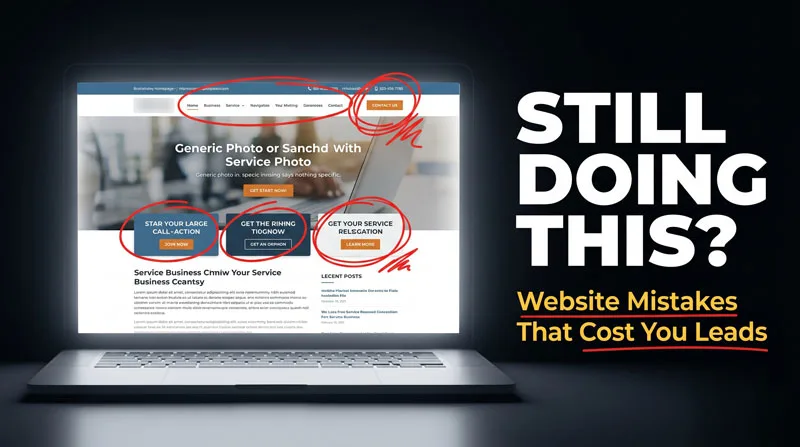
I have reviewed a lot of websites over the years. The ones that do not generate leads almost always have the same handful of problems. Not design problems. Strategy problems. Here are the ones I see most often.
Website Redesign Mistakes Service Businesses Keep Making
Redesigning Without a Clear Goal
The most common conversation I have with business owners before a redesign starts with some version of: I just want it to look more professional. That is a reasonable thing to want. But professional looking and lead generating are not the same thing. A website can look polished and still fail completely at turning visitors into inquiries. Before any redesign starts, the goal needs to be specific, not just looks better. Some goals are getting found for these keywords, converts visitors at this rate, and drives calls or form submissions. Without a defined goal you are redesigning for aesthetics. That usually results in a site that still does not generate leads, just with a nicer color palette.
Starting With Design Before Strategy
Most agencies show you mockups before they have asked a single question about your ideal client. That is backwards. The design should be a response to the strategy. Who are we trying to reach, what do they need to see to trust us, and what action do we want them to take. When design comes first, you end up with something that reflects your taste rather than your customer's decision-making process. The sites that convert are built around a clear understanding of the visitor. The ones that just look good are built around the preferences of whoever made the design decisions.
Ignoring SEO Until After Launch
This is the mistake that costs the most money over time. A site gets redesigned, looks great, launches. And then sits invisible because no one thought about keywords, page structure, or meta titles until after everything was built. According to Google Search Central's SEO Starter Guide, every page needs a descriptive title, a clear focus keyword, and properly structured headings before it can rank effectively. Retrofitting SEO onto a finished site means redoing work that should have been done once, correctly, from the beginning. Every page needs a keyword focus before the copy is written. Every URL structure needs to be decided before the site is built.
Treating the Launch as the Finish Line
A website is not a project. It is an ongoing asset. The businesses that get consistent inbound leads from their websites are the ones that publish content regularly, update their service pages when their offerings change, and treat their site like a living document rather than something they built once and moved on from. The launch is the start, not the end. In the first 90 days after a new site goes live, the most important things you can do are submit your URLs to Google Search Console, publish at least two or three blog posts, and request indexing for every important page. HubSpot's 2026 marketing research confirms that website and SEO remains the top ROI-generating channel. But only for businesses that treat it as ongoing, not a one-time project.
Copying Competitors Instead of Differentiating
There is a version of every service business website that looks exactly like every other business in that category. Same stock photos of handshakes and laptops. Same vague headline about helping you achieve your goals. Same list of services with no real reason to choose one over another. Visitors who have looked at three or four options in your category cannot tell you apart. The businesses that convert visitors into inquiries are the ones that say something specific. A clear point of view on how they work, a specific type of client they serve best, a real reason why they are the right choice. That specificity is uncomfortable to write. It is also the thing that makes someone pick up the phone.
What to Take Away From All of This
A redesign is only worth what it produces. If the new site does not get found, does not give visitors a reason to choose you, and does not have a plan for what comes after launch, then you have a prettier version of the same problem. The goal is not a new website. The goal is more of the right clients finding you and reaching out.
Thinking About a Redesign?
A free website audit will show you exactly what is working, what is not, and what the highest-leverage improvements are for your specific situation before you commit to anything.
Sources
- Moz. The Beginners Guide to SEO. https://moz.com/beginners-guide-to-seo
- Google Search Central. SEO Starter Guide. https://developers.google.com/search/docs/fundamentals/seo-starter-guide
- HubSpot. 2026 Marketing Statistics, Trends and Data. https://www.hubspot.com/marketing-statistics