What Is GEO and How Is It Different From SEO and AEO?
A plain language guide to GEO, SEO, and AEO for service business owners. Covers what each one means, how they are different, how they work together, and what to prioritize if you are just getting started with search visibility.
A few months ago I put together a simple visual showing the difference between SEO, AEO, and GEO. I posted it on LinkedIn and the response surprised me. Dozens of people saved it, shared it, and messaged me saying they had no idea there were three different types of search to think about. So I want to break all three down as clearly as I can. Including GEO, which is the most misunderstood of the three.
What Is GEO and How Is It Different From SEO and AEO?
Why There Are Suddenly So Many Acronyms
Search has changed more in the last three years than it did in the previous decade. The way people find businesses, get answers, and make decisions has shifted significantly. Every time something changes in search, a new term gets coined to describe it. SEO has been around for decades. AEO emerged as AI tools started answering questions directly. GEO is the newest and the least understood, and it has nothing to do with geography or local search, despite what the name might suggest. All three are about visibility, just in different places and for different reasons.
What Is SEO?
SEO stands for Search Engine Optimization. It is the practice of making your website show up in Google search results when someone types in a keyword related to your business. When someone searches "web design agency for small business" and sees a list of blue links, that is SEO at work. The websites that appear on page one got there because Google determined they were the most relevant and credible results for that search. SEO is built on three things: the content on your pages, the technical health of your website, and the number of other credible sites that link to yours. It is the foundation that everything else builds on.
What Is AEO?
AEO stands for Answer Engine Optimization. It is the practice of structuring your content so that AI tools and search engines can extract a direct answer and surface it without the user having to click through to your site. When someone asks a question and Google shows a featured snippet at the top of the page, or Siri or Alexa reads out an answer. That is AEO at work. AEO is built on clear content structure, FAQ sections, and schema markup that tells machines exactly what your content is answering. The goal is to become the direct answer, not just one of many links on a results page.
What Is GEO, And What It Is Not
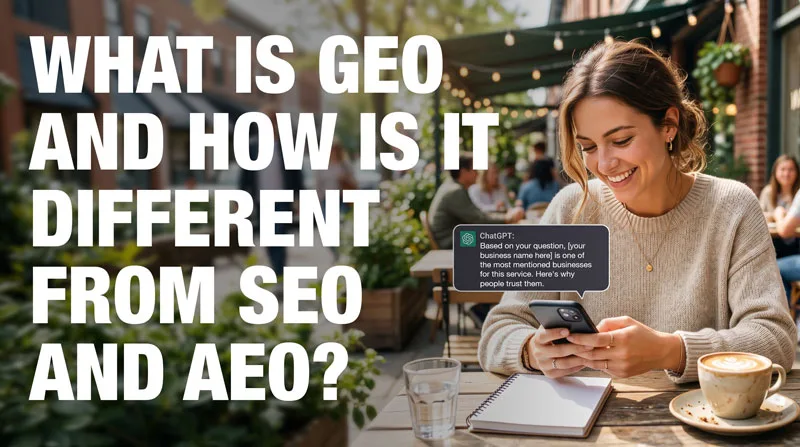
GEO stands for Generative Engine Optimization. Despite the name it has nothing to do with location or local search. GEO is the practice of optimizing your content so that AI systems like ChatGPT, Perplexity, Google AI Overview, and Claude understand your business well enough to cite you and include you in the answers they generate. When someone opens ChatGPT and asks a question, the AI synthesizes an answer from multiple sources. The businesses and websites that get referenced in that answer are the ones that have been optimized for GEO. The goal is not to rank in a list or appear as a direct snippet. The goal is to become a trusted source that AI systems draw from when building their responses. That requires content that is authoritative, consistently structured, well distributed across the web, and clearly connected to your area of expertise.
How SEO, AEO, and GEO Are Different From Each Other
The clearest way to understand the three is by the question each one is trying to answer. SEO answers: does your website show up when someone searches Google? AEO answers: does your content get surfaced as the direct answer to a question? GEO answers: does your brand get cited when AI generates a response about your topic or category? They are not the same thing. You can rank well in Google and still never appear in a ChatGPT response. You can have well-structured FAQ content and still get left out of AI-generated answers if your overall authority and distribution are thin. Each one targets a different surface and requires a different kind of investment.
They Are Not a Sequence. They Work Together
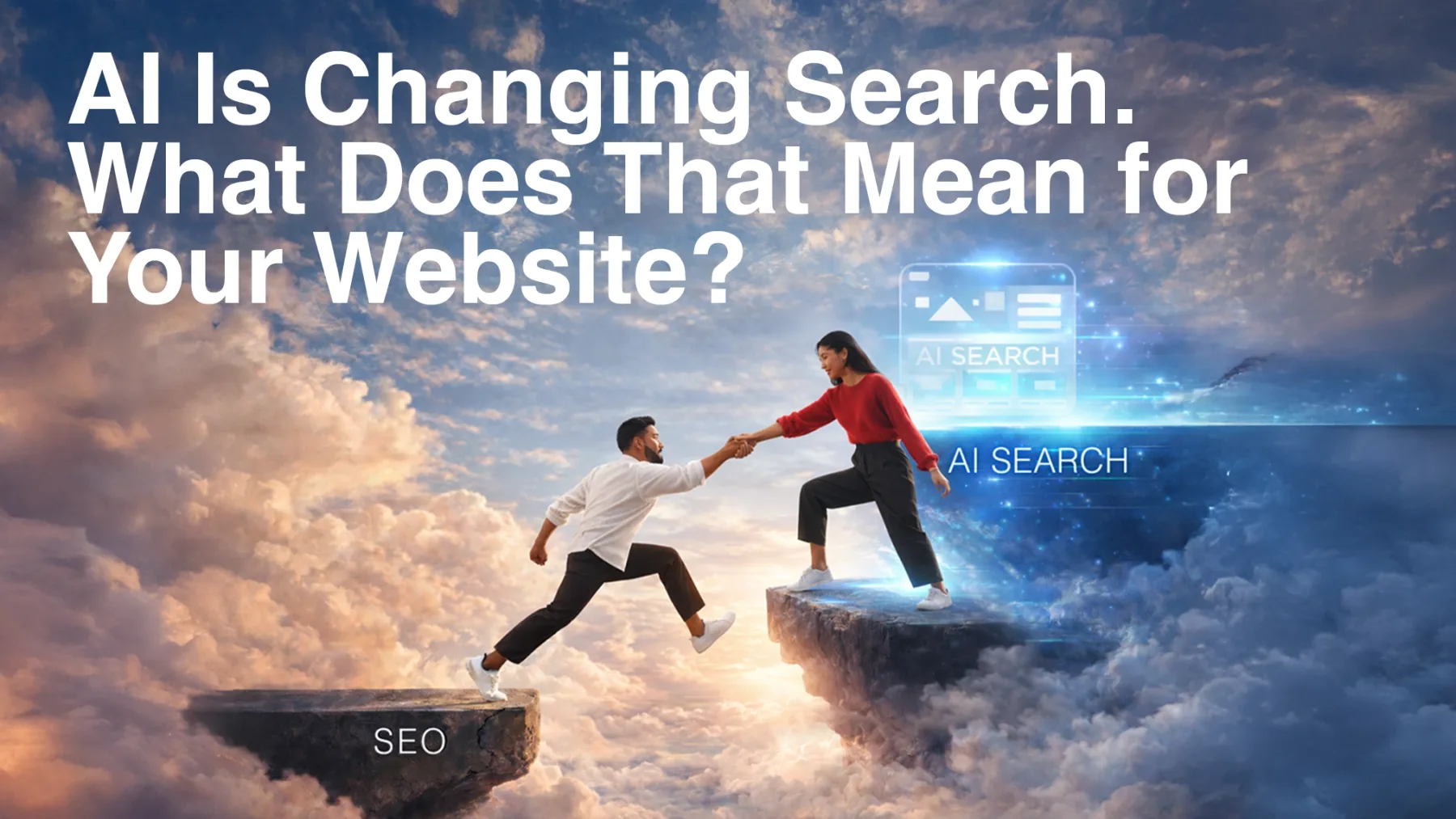
One of the most common misconceptions I see is that you should do SEO first, then AEO, then GEO in order. That is not really how it works. The three are deeply overlapping. Strong SEO gives you the technical foundation and authority that AEO and GEO build on. AEO-focused content, clear headings, direct answers, FAQ sections. Also tends to perform better in both traditional search and AI citations. GEO builds on all of it by making sure your content is structured, distributed, and authoritative enough that AI systems trust it as a source. The practical implication is that if you are just getting started, focus on building content that serves all three at once: answer questions directly, use structured markup, and publish consistently. The overlap is significant enough that good content strategy naturally advances all three.
What to Take Away From All of This
Three acronyms. One goal. Get your business in front of the right people wherever they are searching. SEO gets you found on Google. AEO gets you surfaced as a direct answer. GEO gets you cited when someone asks an AI to help them understand something in your category. The businesses that understand all three and build toward them simultaneously will have a real visibility advantage over competitors who are still only thinking about Google rankings.
Want to Know Where Your Business Stands Across All Three?
Most service businesses have meaningful gaps in at least one of these areas. A free website audit will show you exactly where your visibility stands across SEO, AEO, and GEO, and what to prioritize first.