What is SEO & Why Your Business Needs It
A plain language explanation of SEO for service business owners.

Introduction
Every week I talk to service business owners who know they need SEO but are not entirely sure what it means or where to start. They have heard it matters. They have been pitched on it by agencies. But nobody has ever sat down and explained it clearly without trying to sell them something at the same time.
This post is that explanation.
What Does SEO Actually Mean?
SEO stands for Search Engine Optimization. It is the practice of making your website more visible in search engine results like Google so that people who are looking for what you offer can find you without you having to pay for every click.
When someone types "web design agency New Jersey" or "best plumber near me" or "HR consulting for small business" into Google, the results that appear are not random. Google uses hundreds of signals to decide which websites to show and in what order. SEO is the work of sending the right signals so your website shows up when the right people are searching.
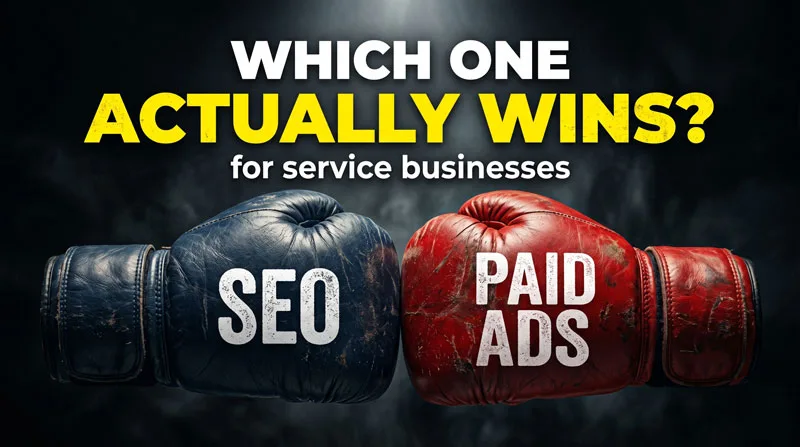
The key word in that definition is organic. Unlike paid ads where you pay every time someone clicks, organic search traffic comes to your site for free once you have earned your ranking. A well optimized page can bring in qualified leads every single day without any ongoing cost beyond the initial investment in creating it.
How Does Google Decide Who Ranks?
Understanding how Google ranks websites helps you understand what to prioritize when optimizing yours.
Google's goal is to give searchers the most useful and relevant result for their query. To do that it evaluates websites across three broad categories.
Relevance
Is this page actually about what the person searched for? Google reads the content of your pages, including the headings, the body text, the page title, and the meta description, to understand what each page is about and whether it matches the search query.
This is why keyword research matters. If someone searches "website redesign for consulting firms" and your page never uses that phrase or anything related to it, Google has no reason to show your page for that search.
Authority
Does Google trust this website as a credible source? Authority is largely built through backlinks, which are links from other websites pointing to yours. When a reputable site links to your content it is essentially a vote of confidence that tells Google your site is worth paying attention to.
Authority takes time to build. A new website starts with very little authority and gains it gradually through consistent publishing, earning links, and building a track record of providing useful content.
User Experience
Does the website provide a good experience for visitors? Google monitors signals like how fast your pages load, whether your site works properly on mobile devices, how long visitors stay on your pages, and whether they click back to search results immediately after landing on your site.
A website that loads slowly, is hard to navigate on a phone, or confuses visitors will rank lower than a faster, cleaner, more user-friendly competitor even if the content is similar.
Why SEO Matters Specifically for Service Businesses
SEO is particularly valuable for service businesses for a few reasons that do not apply as strongly to product-based businesses.
Service businesses rely on trust. Before someone hires a web designer, a consultant, a lawyer, or a plumber, they do research. They search for options, read about services, compare agencies, and look for signals that a business is credible and capable. A strong SEO presence means you show up during that research phase and start building trust before the prospect has even visited your website.
Service businesses sell locally or regionally. Local SEO, which targets searches that include a location like "marketing agency NJ" or "web designer near me," gives service businesses a significant advantage because the competition is far less intense than for national terms. A well optimized local service business can rank on page one faster and more sustainably than almost any other type of business.
Service businesses benefit from long-term compounding. A blog post that ranks well for a relevant keyword can bring in leads every month for years. Unlike paid advertising where traffic stops the moment you stop paying, SEO compounds over time. Each piece of content you publish, each page you optimize, and each link you earn adds to an asset that keeps delivering results.
The Main Components of SEO
SEO is not one thing. It is a combination of several practices that work together to improve your visibility in search results.
On-page SEO
This is everything you do on your own website to make it more search-friendly. It includes using the right keywords in your page titles, headings, and content, writing clear meta descriptions, structuring your pages logically, and making sure every page has a clear purpose and target keyword.
On-page SEO is entirely in your control and it is usually the best place to start because the improvements are immediate and measurable.
Technical SEO
This covers the behind the scenes elements that affect how well search engines can find and read your website. It includes site speed, mobile responsiveness, proper URL structure, fixing broken links, setting up a sitemap, and making sure your pages are indexed correctly in Google Search Console.
For most service business websites built on modern platforms like Webflow, the technical foundations are largely handled automatically. But it is worth auditing periodically to make sure nothing has slipped.
Content SEO
This is the practice of creating pages and blog posts that target specific keywords and answer the questions your potential clients are searching for. Content is the fuel that powers your SEO over the long term. Each new piece of content is a new opportunity to rank for a relevant search and attract the right visitors to your site.
For service businesses, the most valuable content is a combination of service pages that target transactional and local keywords and blog posts that target informational and commercial keywords.
Off-page SEO
This covers everything that happens outside your website that affects your rankings. Backlinks are the most important off-page signal. Getting mentioned and linked to by other credible websites, industry publications, local directories, and partner businesses builds the authority that helps your site rank for competitive keywords.
Off-page SEO takes the most time to build but it is also the hardest for competitors to replicate quickly which makes it a durable long-term advantage.
How Long Does SEO Take to Work?
This is the most common question about SEO and the honest answer is that it depends on how competitive your market is and how consistently you execute.
For a new service business website targeting local and specific keywords, the first signs of ranking movement typically appear within 2 to 3 months of consistent optimization and content publishing. Meaningful organic traffic usually starts within 3 to 6 months. Significant results that make a real difference to your lead volume typically take 6 to 12 months of sustained effort.
This timeline feels slow compared to paid ads which can drive traffic immediately. But the difference is that paid traffic stops the moment you stop paying. Organic traffic from SEO continues to compound and grow as long as you keep publishing and optimizing. The businesses that invest in SEO early and consistently are the ones that eventually have the most durable and cost-effective lead generation systems.
Where to Start With SEO for Your Service Business
If you are just getting started with SEO, here is the order of operations that makes the most sense for a service business.
Set up Google Search Console and Google Analytics if you have not already. These free tools tell you how your site is performing in search and give you the data you need to make informed decisions.
Make sure every page on your site has a unique title tag and meta description that includes the primary keyword for that page. This is the most basic SEO requirement and still one of the most commonly missed.
Claim and optimize your Google Business Profile. For local service businesses this is one of the fastest ways to improve your visibility in local search results and on Google Maps.
Start publishing one to two blog posts per month that target specific keywords your potential clients are searching for. Consistency over time matters more than volume. Two well-optimized posts per month published consistently will outperform ten posts published in one week and then nothing for three months.
Get listed in relevant directories. Clutch, DesignRush, and industry-specific directories create backlinks and consistent brand mentions that help build your authority faster.
What to Take Away From All of This
SEO is not a mystery and it is not reserved for big companies with large marketing budgets. It is a set of practices that any service business can implement consistently to build a sustainable source of organic leads over time.
The businesses that win in search are not necessarily the most sophisticated. They are the most consistent. Start with the basics, publish regularly, and build from there. The compounding effect of consistent SEO is one of the most powerful growth levers available to a service business that is willing to play the long game.
Want Help Getting Your SEO Foundation Right?
Setting up the technical foundations, finding the right keywords, and creating content that actually ranks takes time and expertise most service business owners do not have to spare.
That is what we do at Over the Fold. We build websites with SEO baked in from the start and create content strategies that attract the right clients without relying on paid ads.
Start with a free website audit. We will review your current site and show you exactly where your biggest SEO opportunities are.